The Framing Inherited
- Growth means acquiring or reselling.
- Customers don’t come back.
- Success is a transaction — a match, a conversion, a monetized action.
Strategy & Systems · Product Vision
A product strategy that connected existing services and gave customers a clearer path forward.
I mapped the full service ecosystem, reframed the original retention problem, and created a vision for a more connected customer experience.
The Context
WealthGuide already offered products, education, tools, and professional support. But customers encountered them as separate services and not as one connected experience.
The problem wasn’t a lack of value. It was a lack of visible pathways for the customers.
The Deeper Problem
The problem was presented to me as a retention issue. Fewer than one in five customers returned for a second service. Before designing anything, I asked whether retention was the real problem or just a symptom.
The Framing Inherited
The Framing Proposed
The shift: From more transactions → to better customer outcomes.
Seeing the System
Key Observation
Customers remained within the areas they only knew about but missed the opportunities for other relevant products and services.
I mapped every product, business unit, customer entry point, and how customers moved. I also mapped out how the business wanted them to move.
While customers could enter the ecosystem through many different channels, there was limited or no guidance to help them discover other services that might help them further.
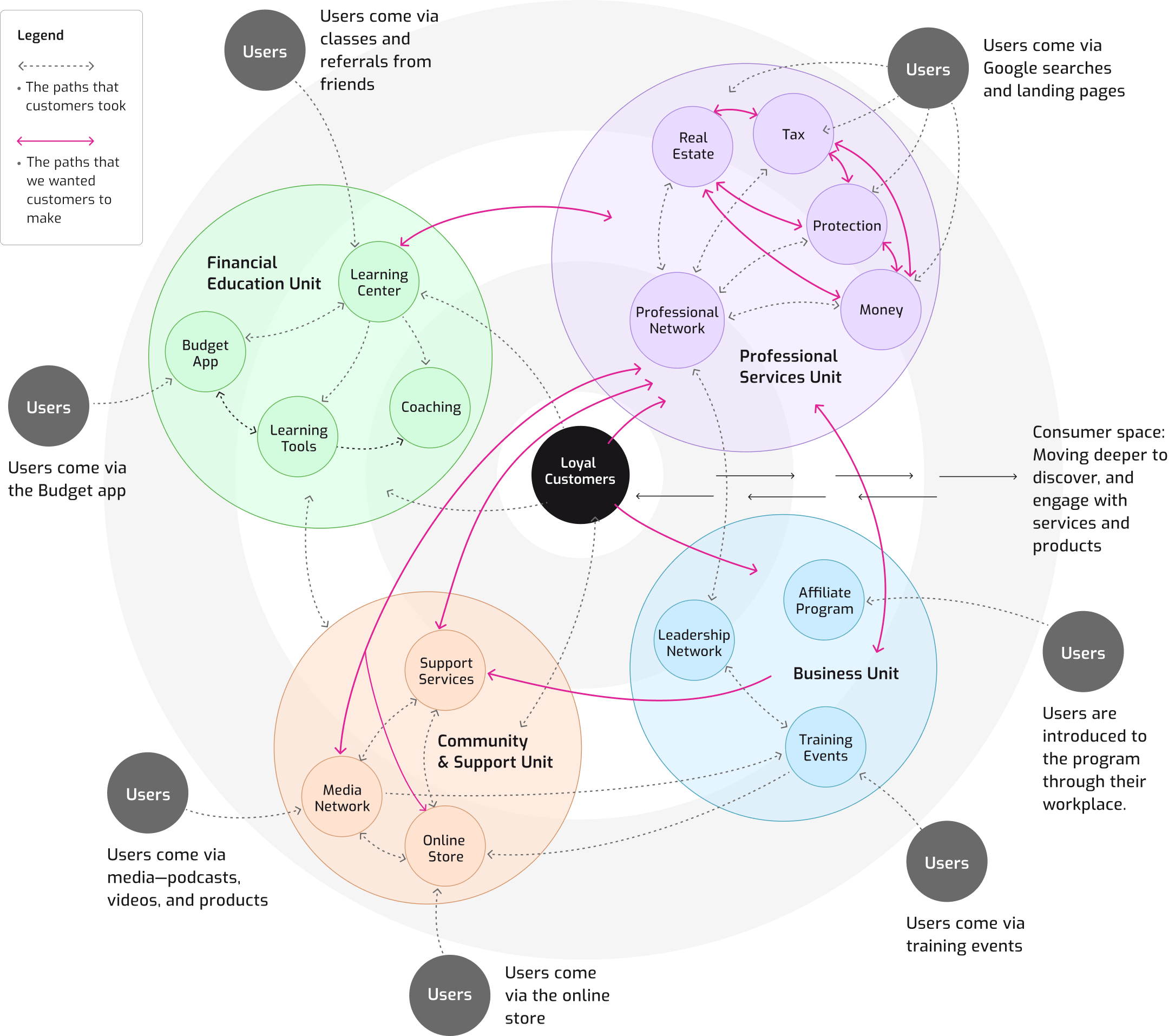
Customers enter through media such as podcasts and videos, the online store, classes and referrals, Google searches and landing pages, the budget app, training events, or their workplace. The ecosystem includes financial education, professional services such as money, protection, tax, and real estate, community and support, and business offerings. Dotted gray lines show the paths customers took. Solid magenta lines show proposed connections to help customers discover and engage with other relevant services rather than remain within the area they already know.
Design Response
The exploration revealed several opportunities across the ecosystem. I chose to focus on improving customer journey guidance and helping customers discover relevant services as their needs evolved. The goal was not to create more products but to reveal clearer pathways between existing products and services.
Make related services easier for people to discover.
Connect education with a suggested next step action.
Introduce services when they are most relevant to customers.
Support customers across the whole journey.
Research Planner
I prepared an interview guide to carry the exploration into real conversations — focused on how customers discover services, decide, and re-engage over time.
Future-State Vision
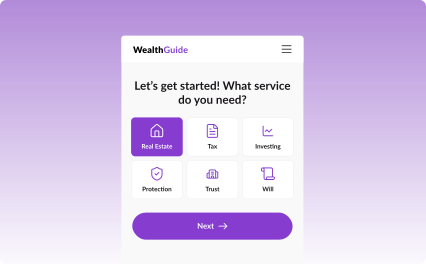
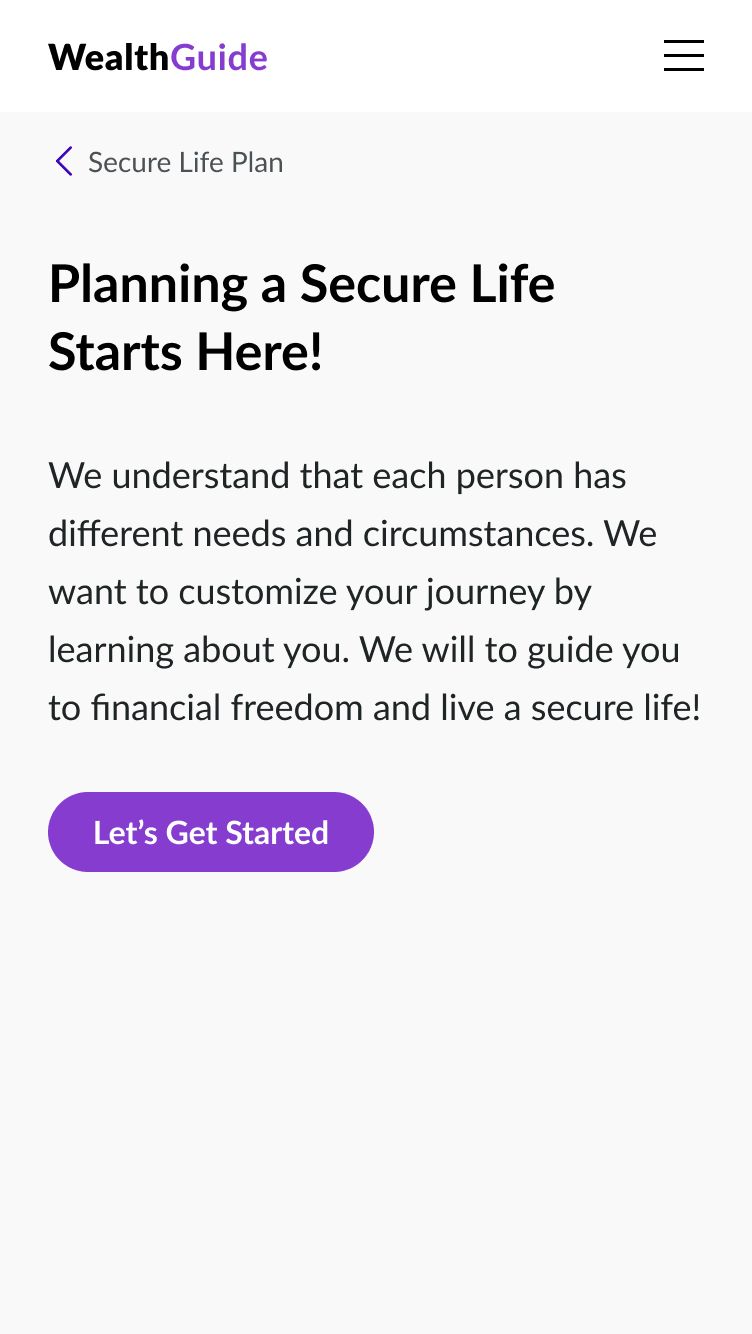
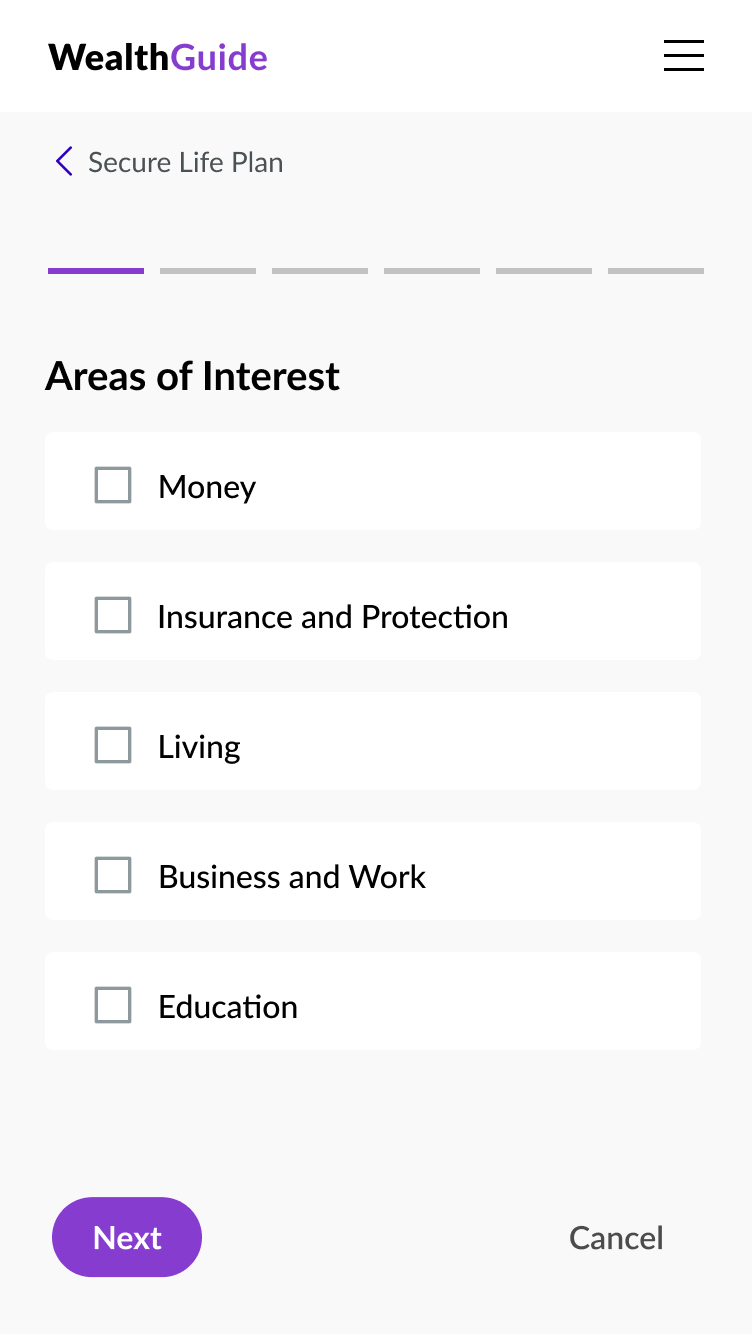
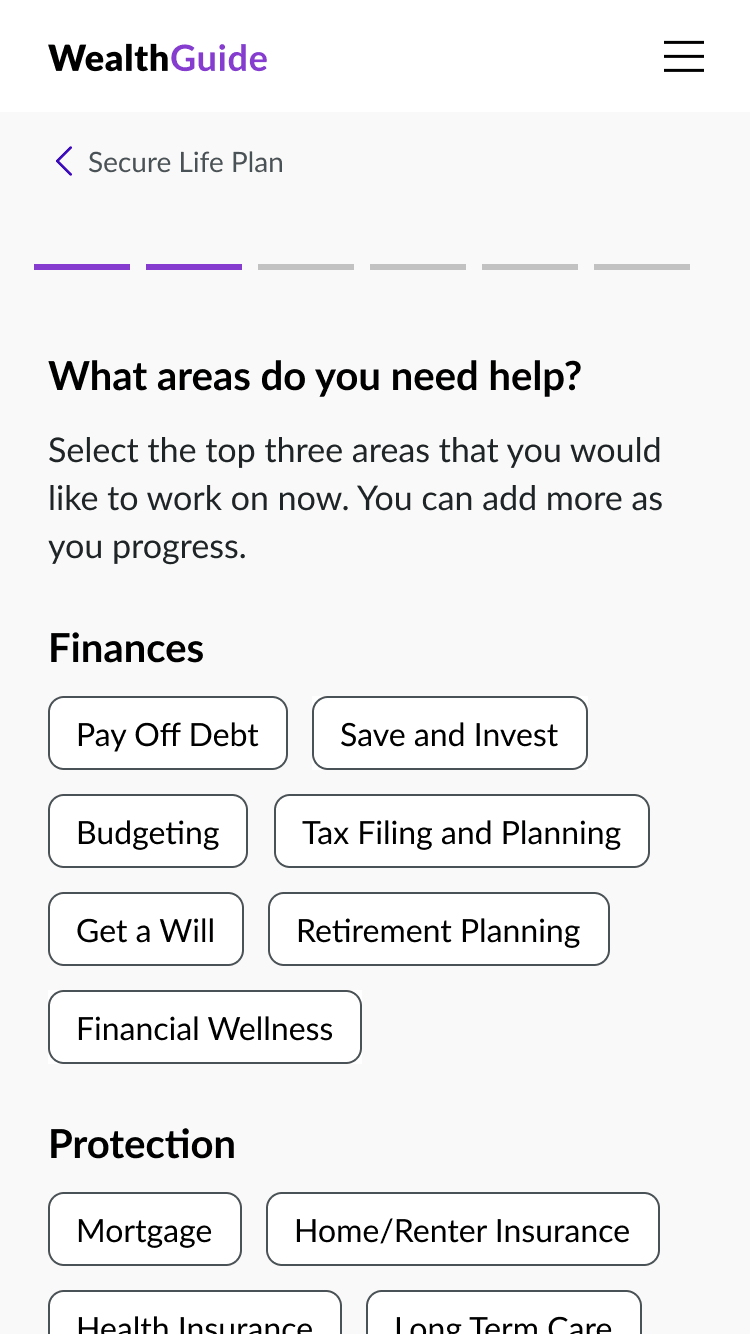
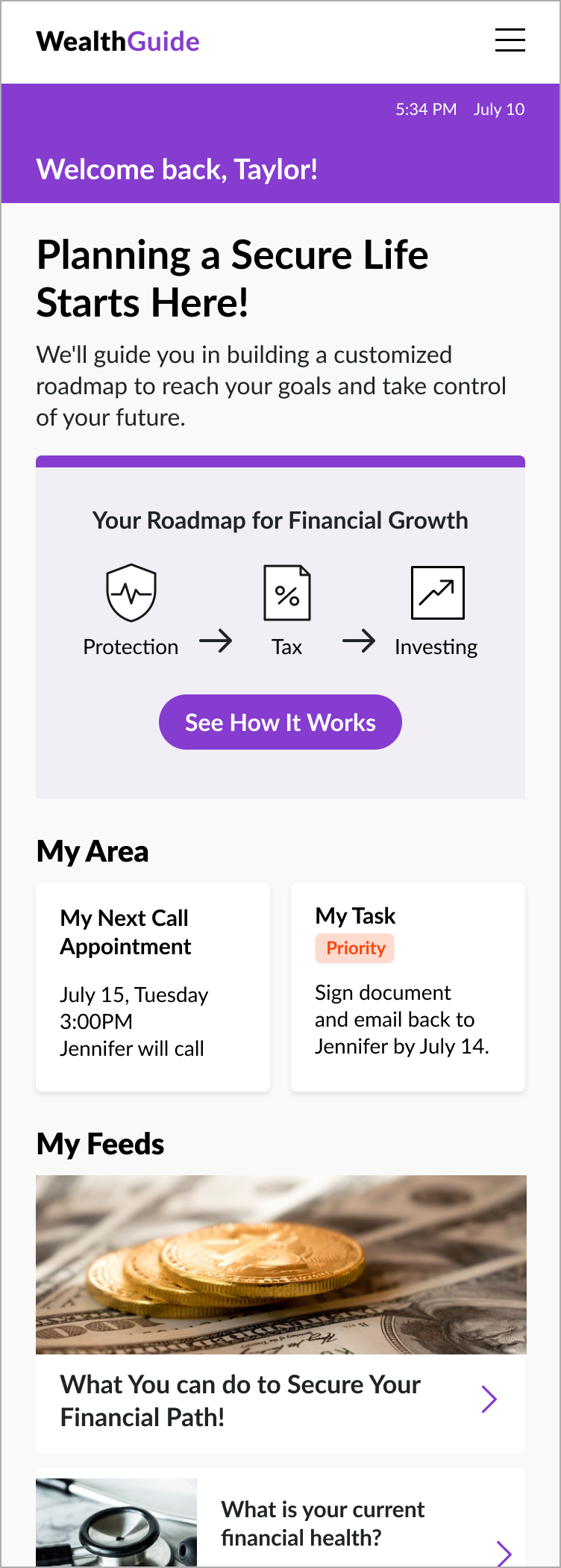
Instead of asking customers to choose a product, the experience starts with what they need. It then brings together the right guidance, tools, and professional support to help them take the next step.
Proposed Customer Journey
Future-state concept. Goal-based planning, education, personalized recommendations, and professional services connected in one continuous experience.
Evidence
The scope of this project was an exploration. The work concluded at the vision and research planning stage.
Insight
Organizations may manage products, services and business units separately. Customers experience all of them as one company.
Sometimes the greatest opportunity isn’t building something new. It’s helping people navigate what already exists. And that starts with understanding the system before designing any one part.
Start a Conversation
Tell me what you’re working on, what feels unclear, and where you hope to go. We can begin by making sense of it together.